
Guangzhou A.C.T Products Co.,Ltd To Make The Global Delivery More Efficient
¿Por qué las bolsas de reparto y los cascos de motocicleta requieren dos estrategias de abastecimiento diferentes?
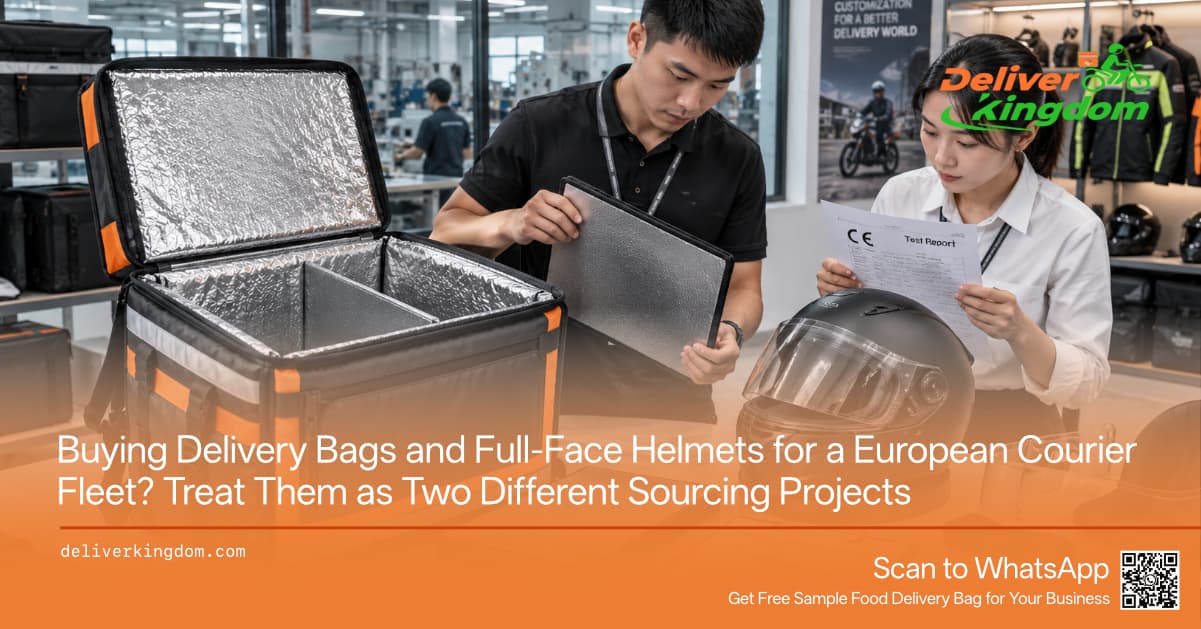
Una reciente consulta comercial combinó dos productos que suelen adquirir las empresas de reparto en motocicleta: bolsas de reparto isotérmicas personalizadas y cascos integrales para motocicleta. A primera vista, parece un único proyecto de equipamiento para motoristas. Sin embargo, desde la perspectiva de la adquisición, ambos productos deben tratarse de forma muy diferente. Una bolsa de reparto de alimentos es muy flexible. Los compradores pueden ajustar los materiales, la capacidad, el color, los compartimentos, el aislamiento, la posición del logotipo, los paneles rígidos, las correas, los bolsillos y los métodos de impresión según sus necesidades de reparto. Un casco de motocicleta para uso en carretera es diferente, ya que la configuración de seguridad homologada es primordial. Para un proyecto en el mercado europeo, los compradores deben identificar un modelo de casco con la homologación requerida según el Reglamento n.º 22.06 de la ONU y verificar su documentación de homologación antes de plantearse una personalización estética extensa. Una declaración CE general no resuelve la misma cuestión normativa: el Reglamento de EPI de la UE excluye específicamente la protección para la cabeza, la cara y los ojos de los motoristas, que está cubierta por el Reglamento n.º 22 de la ONU. Por lo tanto, DeliverKingdom aborda estas dos categorías con prioridades diferentes: la personalización operativa es lo primero para las bolsas de reparto, y la configuración homologada verificada es lo primero para los cascos.
Lo que una bolsa de reparto comercial para motocicleta debe soportar a diario
Una bolsa de reparto para motocicletas pasa su vida útil en un entorno mucho más exigente que una bolsa isotérmica común. Puede transportar comidas de restaurantes durante un turno, pedidos de supermercado durante otro y cargas múltiples más grandes durante las horas punta de la tarde. Se abre, se monta, se desmonta, se limpia y se expone repetidamente a la lluvia, las vibraciones de la carretera y la suciedad exterior. Por este motivo, una bolsa de reparto de comida para motocicletas personalizada para flotas de mensajería europeas debe evaluarse en función del flujo de trabajo diario, y no solo de la apariencia. Los compradores deben considerar materiales exteriores impermeables o resistentes al agua, el grosor del aislamiento térmico, un forro de fácil limpieza en contacto con los alimentos (cuando corresponda), elementos reflectantes, costuras reforzadas, sistemas de cremallera resistentes, correas de montaje estables y organización interna. DeliverKingdom apoya el desarrollo OEM y ODM en función de estas variables, en lugar de imponer una estructura estándar a todas las flotas. Una operación centrada en restaurantes puede priorizar el rendimiento térmico y los separadores internos, mientras que una operación mixta de supermercado y servicio de comida puede necesitar compartimentos más flexibles. La bolsa correcta es la que sigue siendo práctica después de cientos de entregas, no simplemente la que luce más impresionante cuando se fotografía vacía junto a una motocicleta.
Creación de una plataforma de reparto centrada en los flujos de trabajo de comida, vehículo y repartidor.
La especificación adecuada de la bolsa de reparto comienza con tres preguntas: ¿qué se transporta, cómo se traslada la bolsa y con qué frecuencia la usa el repartidor? Una bolsa de reparto isotérmica montada en el vehículo puede necesitar una estructura rectangular estable y puntos de sujeción inferiores reforzados, mientras que una bolsa que se retira con frecuencia de la motocicleta puede requerir asas laterales más resistentes y un peso en vacío más manejable. Los operadores de alimentos pueden necesitar papel de aluminio u otro revestimiento isotérmico fácil de limpiar, mientras que los servicios de supermercado o de pedidos mixtos pueden valorar los separadores extraíbles que permiten cambiar el espacio interno entre rutas. Las tiras reflectantes pueden mejorar la visibilidad durante el trabajo nocturno, y la marca en los cuatro lados puede convertir los grandes paneles exteriores en un espacio publicitario móvil. DeliverKingdom puede personalizar la tela, el color, los compartimentos, las capas térmicas, las áreas de impresión y los sistemas de sujeción según estas condiciones. Esto es más útil que elegir una bolsa simplemente por su capacidad. Dos empresas de reparto pueden transportar aproximadamente el mismo volumen, pero requerir productos completamente diferentes porque una realiza rutas cortas a restaurantes y la otra pasa horas transportando pedidos mixtos por una zona urbana.
Paneles desmontables, separadores y soportes para motocicletas para uso diario en flotas.
El soporte rígido es especialmente útil cuando una bolsa de reparto transporta cajas de comida apiladas o varios pedidos a la vez. Sin refuerzo, las paredes laterales grandes pueden colapsar hacia adentro cuando la bolsa está parcialmente cargada, mientras que la base puede ceder bajo un peso concentrado. Los paneles rígidos extraíbles ofrecen una solución intermedia útil: ayudan a que la bolsa mantenga su forma durante el servicio, pero se pueden quitar para mantenimiento, limpieza a fondo o almacenamiento más plano. Los divisores internos proporcionan un nivel adicional de control al separar los pedidos de los clientes, bebidas, comestibles o diferentes categorías de alimentos. Para el uso en motocicleta, el sistema de montaje merece la misma atención. Las correas reforzadas deben sujetarse a través de áreas debidamente reforzadas en lugar de tirar directamente de paneles de tela con costuras ligeras. DeliverKingdom puede desarrollar estos detalles estructurales en función del portaequipajes de motocicleta o el método de transporte previsto. Para los compradores que solicitan una bolsa de reparto isotérmica personalizada para motocicleta con paneles extraíbles, las pruebas de prototipos deben incluir cargas reales y montaje real en lugar de simplemente comprobar si la bolsa "parece resistente". Las motocicletas generan vibraciones, fuerzas de frenado y movimiento constante. La estructura de montaje debe tener en cuenta la física, que sigue siendo sorprendentemente fácil de pasar por alto en la búsqueda de proveedores por catálogo.
Por qué la adquisición de cascos debe comenzar con la aprobación del Reglamento n.º 22.06 de la ONU.
Para los cascos integrales de motocicleta destinados al uso en carretera en el mercado europeo, la verificación normativa debe realizarse antes de comparar precios o negociar marcas. El Reglamento n.º 22 de la ONU, serie 06, establece los requisitos de homologación para cascos y viseras de protección para motocicletas, y la UNECE publica la documentación vigente de la serie 06. El reglamento exige que los cascos homologados lleven una marca de homologación internacional, y dicha homologación está vinculada a un tipo de casco específico. Esto significa que el comprador debe solicitar la documentación de homologación del modelo exacto de casco que se ofrece, y no simplemente una página del catálogo con la indicación «certificado ECE». Por lo tanto, el papel de DeliverKingdom en este tipo de proyectos debe basarse en pruebas: identificar los modelos de casco candidatos, proporcionar los documentos de homologación y las marcas permanentes correspondientes para su verificación, y solo entonces proceder a la inspección de muestras y a las negociaciones comerciales. Un certificado genérico perteneciente a otra carcasa o a un modelo anterior no es un sustituto válido. En la adquisición de equipos de seguridad, la documentación que casi coincide es simplemente documentación que no coincide.
Cómo comprobar la marca E, el número de aprobación, la protección de la barbilla y la documentación de la visera.
El casco físico debe cotejarse con la documentación de homologación. Según el Reglamento n.º 22.06 de la ONU, la marca de homologación internacional incluye un círculo que rodea la letra E, seguido del número distintivo del país que otorgó la homologación, junto con el número de homologación e información adicional sobre la clasificación. Para un casco con una cubierta inferior protectora para el rostro, la marca de homologación utiliza el símbolo «P»; se aplican otras clasificaciones a diferentes configuraciones de la mentonera. La información del número de serie de producción también forma parte de la estructura de marcado. Los compradores deben fotografiar la etiqueta permanente de la muestra y compararla con la documentación de homologación suministrada, en lugar de aceptar una pegatina suelta o una declaración de marketing. Las viseras también tienen requisitos de homologación y marcado, incluyendo información específica cuando una visera no es adecuada para condiciones de oscuridad o baja visibilidad. Para un proveedor de cascos integrales para flotas de reparto europeas, el paquete de adquisición útil incluye, por lo tanto, el certificado, la información de la autoridad de homologación, fotografías de la etiqueta del casco, información sobre la visera, tallas, construcción de la carcasa, peso y disponibilidad de piezas de repuesto.
Por qué los colores y logotipos personalizados de los cascos deben mantenerse dentro de la configuración aprobada.
La personalización de cascos requiere más cautela que la de bolsas de reparto. Un comprador puede desear colores personalizados, logotipos de la empresa, embalaje o identificación de la flota, pero no se debe asumir que los cambios no tendrán ningún efecto normativo. El Reglamento n.º 22 de la ONU establece que los componentes o dispositivos instalados en un casco no deben impedir que este siga cumpliendo con la normativa, y las modificaciones a un tipo de casco homologado están sujetas al proceso de homologación. La autoridad competente puede determinar que una modificación no tiene un efecto adverso apreciable o puede requerir pruebas adicionales o una prórroga de la homologación. Por ello, un comprador de flotas debe evitar tratar un casco homologado como una gorra promocional genérica. No se pueden añadir perforaciones estructurales, accesorios no homologados, cambios en la carcasa u otras alteraciones simplemente porque al departamento de marketing le guste el diseño. DeliverKingdom puede analizar el color, la aplicación del logotipo homologado y el embalaje personalizado para los modelos candidatos, pero el proceso comercial más seguro es preservar la configuración de seguridad homologada y confirmar cualquier cambio propuesto con respecto al alcance de la homologación del fabricante del casco.
Qué deben comprobar los compradores durante la inspección de muestras
La fase de muestreo debe verificar aspectos completamente diferentes para ambos productos. Para la bolsa de reparto, los compradores deben cargar recipientes de comida reales o pedidos de supermercado, montar la bolsa en la motocicleta prevista, probar las correas reforzadas, comprobar el acceso a la cremallera, retirar y volver a instalar los paneles rígidos, limpiar el forro, inspeccionar los separadores y comprobar la visibilidad del logotipo desde todos los ángulos. Para el casco, la inspección debe comenzar con la identificación y la documentación: modelo exacto, talla, marca de homologación, número de homologación, clasificación de protección de la barbilla, marca de la visera y correspondencia con el certificado suministrado. El comprador también debe comprobar el ajuste, la comodidad, la ventilación, el sistema de retención, el funcionamiento de la visera, el peso, las instrucciones, las advertencias, el embalaje y la disponibilidad de viseras de repuesto u otras piezas de recambio homologadas. La documentación de la UNECE también exige información y advertencias para el usuario y especifica que las marcas homologadas del casco deben ser claras y resistentes al desgaste. Para la distribución comercial europea, también deben confirmarse los requisitos lingüísticos del mercado de destino antes de la producción en masa. Un error en la bolsa de reparto puede generar inconvenientes operativos. Un error en la documentación del casco puede detener el producto mucho antes en la cadena de suministro.
¿Por qué trabajar con DeliverKingdom en un proyecto completo de equipamiento para ciclistas?
DeliverKingdom trabaja en el sector de equipos de reparto desde 2013, fabricando bolsas para reparto de comida, mochilas térmicas, cascos y chaquetas para repartidores, y equipos de protección para proyectos comerciales. Su planta de producción en Yangchun, Guangdong, abarca más de 12 000 metros cuadrados y cuenta con más de 400 empleados, con certificaciones BSCI e ISO9001 que avalan la evaluación de la fábrica y la gestión de calidad. La ventaja para un comprador que adquiere tanto bolsas de reparto como equipos para repartidores reside en la coordinación. Los colores de las bolsas, la aplicación de logotipos, los detalles reflectantes y el embalaje pueden desarrollarse como una única identidad de flota, en lugar de estar divididos entre proveedores independientes. Asimismo, DeliverKingdom puede tratar los productos de seguridad regulados de forma diferente a la personalización de artículos textiles: la bolsa de reparto puede desarrollarse ampliamente en función de las necesidades operativas, mientras que los proyectos de cascos deben basarse únicamente en la documentación de homologación específica del modelo, que el comprador puede verificar. Esta distinción es importante. Un proveedor útil no responde a todas las preguntas técnicas con un simple «sí, es personalizable». A veces, la respuesta correcta es «esta pieza puede cambiar, esta pieza necesita verificación de homologación y esta pieza debe permanecer exactamente como está homologada». Eso resulta considerablemente menos emocionante que un catálogo, pero mucho más útil para un importador a largo plazo.
Transición de muestras a pedidos comerciales para el mercado europeo.
Una secuencia de proyecto lógica comienza separando las dos vías de abastecimiento. Para las bolsas de transporte, el comprador puede revisar los modelos existentes, definir su uso, seleccionar el material y la estructura preferidos, desarrollar el color personalizado y la marca en los cuatro lados, y luego probar una muestra física en la motocicleta prevista. Una vez aprobada, se pueden comparar los precios y el embalaje entre los diferentes niveles de cantidad comercial, calculando las dimensiones de la caja, el peso bruto y el volumen total del envío a partir de la especificación final. Para los cascos, los modelos candidatos deben filtrarse primero mediante la documentación de aprobación verificada según el Reglamento n.º 22.06 de la ONU. La muestra debe cotejarse con el certificado y el marcado E permanente antes de finalizar el color, el logotipo, el embalaje y la documentación en el idioma local. DeliverKingdom puede facilitar la adquisición mediante la prueba de muestras, de modo que los compradores inspeccionen ambos productos antes de adquirir mayores cantidades. Este proceso por etapas proporciona a los importadores y distribuidores una base mucho más sólida para evaluar las opciones logísticas FOB o de entrega, el plazo de producción, las garantías, los componentes de repuesto y los pedidos repetidos futuros. El objetivo no es simplemente llenar un contenedor con equipamiento para motociclistas, sino crear una gama de productos que realmente se pueda vender, usar y volver a pedir con menos sorpresas desagradables.
P: ¿Se puede personalizar una bolsa de reparto para motocicleta imprimiendo en sus cuatro lados?
R: Sí. DeliverKingdom puede desarrollar áreas de marca en varios paneles exteriores, según la ubicación de la cremallera, los bolsillos, las tiras reflectantes y las costuras estructurales. Se pueden evaluar la serigrafía, los métodos de transferencia térmica y otras opciones de logotipo según la tela y el diseño.
P: ¿Qué características deben buscar los compradores en una bolsa de reparto isotérmica montada en motocicleta?
A: Entre las características importantes se incluyen un material exterior resistente a la intemperie, un aislamiento térmico adecuado, un forro fácil de limpiar, puntos de fijación reforzados para motocicletas, elementos reflectantes, cierres robustos, soporte estructural estable, paneles rígidos extraíbles y separadores internos donde el flujo de trabajo de entrega lo requiera.
P: ¿Es suficiente la certificación CE para un casco integral de motocicleta destinado a su uso en carreteras europeas?
A: Una declaración CE general no sustituye la verificación conforme al marco de homologación de cascos para motocicletas. El Reglamento UE sobre EPI excluye la protección para la cabeza, la cara y los ojos en motocicletas, que está cubierta por el Reglamento n.º 22 de la ONU. Por lo tanto, los compradores deben verificar la homologación de tipo y el marcado de homologación física del modelo exacto de casco, conforme al Reglamento n.º 22.06 de la ONU.
P: ¿Qué se debe comprobar en una muestra de casco integral ECE 22.06?
A: Los compradores deben comparar el modelo exacto del casco con su documentación de homologación, inspeccionar la marca de homologación E permanente y el número de homologación, verificar la clasificación de la mentonera protectora y la información de la visera, y revisar el sistema de retención, el tamaño, el ajuste, el peso, las instrucciones, las advertencias y los componentes de repuesto homologados disponibles.
P: ¿Por qué elegir DeliverKingdom para un proyecto de bolsas y cascos de reparto?
A: DeliverKingdom trabaja en el sector de equipos de reparto desde 2013 y ofrece bolsas personalizadas para reparto de comida, cascos para repartidores, chaquetas y equipos de protección. Su fábrica, con más de 12 000 metros cuadrados y más de 400 empleados, cuenta con las certificaciones BSCI e ISO9001. Para proyectos combinados, DeliverKingdom puede coordinar la imagen corporativa de la flota y la producción comercial, manteniendo la verificación de homologación de los cascos independiente de la personalización de los artículos textiles.

 Obtenga una cotización en línea